Rebecca Handler

Name Change

What if today I announced to my children that from now on I would call them different names? The younger one would be Helen, and the older one would be, say, Hazel. They would now be sisters with the same first initial, more matchy-matchy, I would tell them. Beautiful new names for beautiful children, I would say.

Of course, being nine and eleven, they would reject this notion. They would cry and say they don’t understand. I would assure them this is how it must be, that their old names were temporary, stand-ins for their real ones. I had already taken care of the paperwork. I would love them just as much. Nothing else would change.

Helen and Hazel would grow older, and see each other a few times a year, sometimes with a partner, sometimes on their own. One of them would have a job that requires travel, and the other would share a house with three friends and two dogs. One would fracture her ankle skiing, and the other would research home remedies. One would host Thanksgiving, and the other would be a vegetarian for five years until one night after a comedy show she’d try a bite of her friend’s hamburger and decide to eat meat again, “just once a week, not even.” Helen and Hazel would be very different from one another, and would joke that they might not be friends if they weren’t sisters. One would give the other a photo of the two of them on a hiking trail, taken by a stranger. The frame would have been ordered online. It would be made of wood and the engraving would say, Best Friends.

Sometimes, on the phone, or at a café that serves hot chocolate with pink marshmallows and tiny spoons, Helen and Hazel would talk about their childhood, about the time one of them burned her hand making quesadillas, or the time one of them got stuck in a tree. They’d wonder what happened to old friends, and that doll, the one with the fabric belly and the little black boots that always went missing. They’d talk about the birthday party with the boy who wouldn’t stop crying and The Night Of The Big Fight. They’d remember sparklers, baking soda volcanoes, periods, school exams, scary movies, and flashlights under sheets. One of them would ask, “What was that teacher’s name?” and the other would erupt into a fit of giggles, “Mr. Langley! Mr. Langley!”

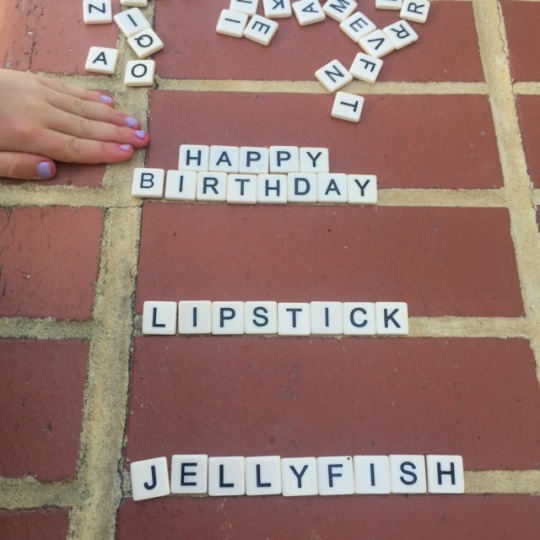
Sometimes, usually preceded by a pause in the conversation, one of them would bring up the name change. Why do you think Mom did that? Who does that? Helen and Hazel would talk about their old names, remember learning to spell them, and recall magnetic letters and laminated placemats. They would wonder how their lives would be different with their old names, or what else might have been taken from them. Saying their old names aloud, they would feel naughty and exhilarated. They would feel like they were talking about other people, two girls that used to exist but no longer do.
What To Do While You’re Waiting

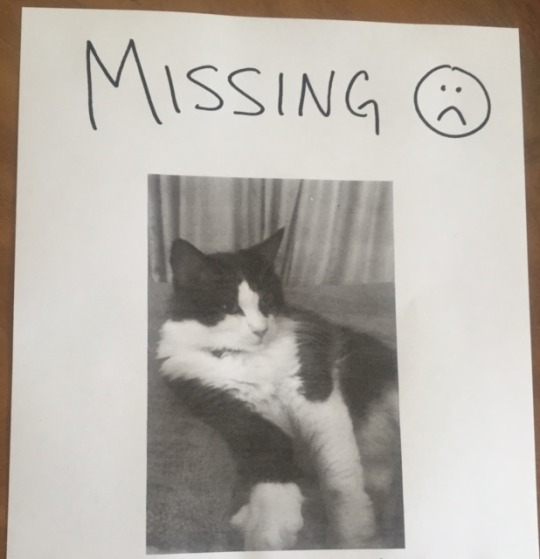
I am waiting for my cat to come home. He disappeared on Wednesday. Today is Friday. People say he’ll come home, that cats always come home. But maybe you should check local shelters, just in case.

I go to Cat Haven, which sounds almost like Cat Heaven. There is a mural on the side of the building with red hearts and smiling cats. I hand a photo to the lady with braces and brown hair. In the photo, Finn is stretched out on the couch, showing off his soft belly. The lady with braces and brown hair asks me questions. Yes he is microchipped. Yes this is out of character. I tell her I am treating this as if my child has disappeared which of course is a ridiculous thing to say and also not true. She says, “But he is your child.” I do not argue with her. She works at Cat Haven.

My friend Celena knows how hard this is. Her cat is named Boris and likes to sleep on top of the bookshelf. She posts flyers near the lake and calls Finn gorgeous which in Australia means enjoyable.

The neighborhood kids come over after school. I feed them Arnott’s biscuits with rainbow sprinkles and slices of apple. My older daughter distributes flyers, exactly 24 to each child, and goes over the plan. They will walk down Keightley to Hensman. They will stay together. They will be back in 40 minutes.

I make tea and check Lost Animals of Perth. A Maltese named Roxy was last seen on Parry Street. One Rainbow Lorikeet has been found, and another is lost. It is not the same one. This has been confirmed.

My phone rings. It is a woman with an Eastern European accent. She lives in the neighborhood and received a leaflet from a child, but she has not seen my cat. She loves all animals and will keep her eyes open.

I call the microchip company, located in Ontario. A woman named Sherri answers. Sherri’s job is to talk to people who have lost their pets. This is what she does all day. I give her Finn’s microchip number and she asks what the weather is like in San Francisco. I say I don’t know but it is raining in Perth, Australia and I’d like to make sure they have my correct phone number on file. I tell Sherri I will put Finn’s litter box outside, but not food because Sherri says it will attract other animals and from what she’s heard about Perth this is a real concern. Sherri has a friend in Perth. I tell her I’ve met several Canadians here, they like the weather.

At night, I promise the kids I will wake them if the cat returns. Dave and I are rewatching Friday Night Lights so we cue up the next episode. It is called, “What To Do While You’re Waiting,” the one where Smash needs to fold towels in the locker room as punishment for taking steroids. We talk about how kind people are in Perth, how much time people are willing to give. This lost cat reminds us why we love it here.

I dream that my cat comes home. As I pet him, he turns into a dog with the face of a man I don’t recognize. Where is he, where is he, where is he.

Merge

“I’ve decided we should adopt.”

Travis looks up from his crossword. His wife is on the other side of the living room, perched on the arm of the sofa, clutching her navy blue ceramic mug. She is still wearing her apron. Dinner was three hours ago. “Isn’t this something we should discuss together?” He puts the cap back on his pen.

“I figured you’d say no. I didn’t want to involve you,” Julie says, blowing on her tea.

“But we’re a family, Jules.” He shakes his head and rubs his index finger against the side of his nose.

Julie stands up and straightens one of pillows on the sofa, the large one she bought a few years ago at a market in Oaxaca and had to carry around for the rest of the day. “You don’t need to worry about it,” she says to Travis.

“What about the kids?”

“I’ve talked with the kids. They’re on board.” She sits down on the sofa, next to a pile of papers she needs to grade.

“Isn’t it expensive?”

“You can’t put a price on this sort of thing.”

“No of course you can’t.” Travis tosses his crossword on the coffee table.

“We can pay in installments.”

“I don’t know Jules. You can’t just spring this on me.”

Julie sighs. “This is exactly why I didn’t want to talk to you about it.”

Travis stands up and walks across the room. He leans over to pick up the students’ papers and carefully places them next to the crossword. He sits down next to Julie and rests his hand on her knee. “We’re a family.”

Julie uncrosses and re-crosses her legs, inadvertently knocking his hand away. “I said I’d get back to them tomorrow.”

“Tomorrow?” Travis rubs his index finger against the side of his nose. A car alarm goes off. First it sounds like a French ambulance, and then it beeps like an angry metronome. It stops mid-beep.

“I have a picture.” Julie reaches into the pocket of her apron and hands Travis a photograph.

“A picture? Really Jules?” Travis sighs and holds the photo at arm’s length. He stares as it and then looks at his wife and asks tentatively, “Is it the 101?”

“The 280.”

“The 280? Where?”

“Northbound, a section just past Black Mountain Road.”

“I can’t believe that’s still available.”

“It’s old. People don’t want the old ones.”

Travis looks at his shoes. They used to be dark brown and now they are light brown. “Can we go see it?” he asks quietly.

“They said it’s been pretty neglected.”

“Can we name it?”

Julie smiles with relief. “I was thinking Speed. Speedy.”

“Detour?”

“Sounds French.”

“Low Salt Area?”

“Travis, be serious.” Julie rests her mug on the table and twists her back slightly, trying to crack it. They sit in silence for a while.

Travis brightens and asks, “What about Merge?”

“Merge.” Julie says it slowly, seeing how it feels on her lips. “That’s nice. I like it.”

Travis again places his hand on her knee, this time squeezing slightly. “You should have talked to me.”

“You’re right,” Julie says, leaning into him. “We’re a family.”

The Scratch

“The scratch is getting better.”

“That’s good.”

She’s got a three-inch swollen line on her left cheek. The cat.

“I really cleaned it. Got all the blood off. Used an alcohol swab and everything.”

“That’s good.”

“I kind of like it. It gives me character. I’m like Omar.”

“As long as it’s not permanent.” He takes a warm biscuit from the baking sheet she pulled out of the oven five minutes ago and puts it on a plate.

“What if it were?”

“Were what?”

“Permanent. What if I look like this forever?”

“I’d have to completely rethink our marriage.” He smiles.

“Jam?”

“No.” He is scrambling eggs in a bowl.

****

That night she has a dream. She is walking through the bush and a branch hits her in the face. She wakes up. The cat is at the foot of her bed. “See what you’ve done?” she whispers to the cat.

The cat says, “Maybe you should put some cream on that.”

“I don’t want to get up.”

“I’ll get it.” The cat stretches, jumps off the bed, and scampers to the bathroom. She hears him fiddling around in the cabinet, muttering to himself. He runs back, jumps up next to her and deposits a tube of hydrocortisone on her chest.

“Thank you,” she says.

“It’s the least I can do.”

****

The next day, the scrape on her cheek is a faint line. The cream has worked. Her husband tells her she is beautiful. They go to the movies. In the dark, she touches her cheek and decides to leave him. She will not be taking the cat.

Three-Sentence Mysteries

There was a piece of steak in my chicken pie. It was not supposed to be there. The pie was called Chicken and Mushroom Pie.

I bought the pie at the Taylor Road IGA. IGA stands for Independent Grocers of Australia. The one on Taylor Road does not sell pepperoni and I often forget that.

Today I am wearing my Hillary t-shirt. On Tuesday I blocked emails from the Hillary Clinton campaign because I was angry that my t-shirt hadn’t arrived yet. On Wednesday my t-shirt arrived.

There is a woman in my needlepoint class who recently mentioned that she is 97 years old. My friend and I stared at each other in disbelief. Then we thought maybe she had said 79 but we’re not sure.

On the bathroom countertop is a small piece of metal. It is shaped like the outline of a rectangle with one side missing, a hurdle for a tiny track and field athlete. I found it on the bathroom floor two weeks ago and confirmed it is neither part of the sink nor toilet.

This piece of metal will remain on the counter for another week. Then it will be transferred to the junk drawer where it will join other unsolved metal bits. We won’t throw it away because we might need it someday.

I can’t tell the difference between two girls on my daughter’s hockey team. They look nothing alike but for some reason I always confuse them. This embarrasses me.

My ex-boyfriend’s mother was named Sue. It may have been Pam. I always confuse the names Sue and Pam.

A young child’s science project was entitled Is Anything More Sour Than A Lemon? She surveyed family members and found that limes are sourer than lemons. Sourer is the correct way of saying more sour but it doesn’t sound like it.

I bought new shoes last week. As I was removing my old shoes to try on the new ones, the strap on one of my old shoes broke. I had no choice but to buy new shoes.

Aussie, Aussie, Aussie, Oi, Oi, Oi

“He’s consistent with his lifting in the snatch, but unpredictable in the clean and jerk.”

Lasha Talakhadze from Georgia is about to lift 258 kilograms and become an Olympic gold medalist. At the moment however, the Australian commentators are concerned about the weightlifter’s clean and jerk. (Naturally his snatch is not a worry.)

I love the Olympics, and they could not have come at a better time. Need a break from the madman running for office? Pole vaulting! Too cold and cloudy for you in the southern hemisphere? Synchronized diving! Our household is deeply committed. We are eating bowls of chili in front of the television and shouting at each other from across the house. “The Maasai Warrior is on! You can practice piano some other time!”

Australian coverage of the Olympic games is prioritized as follows: First, is there an Aussie in this event? If not, Equestrian. I have watched many horses jump over many things, and still my only question about this sport has not yet been addressed. How did all these horses get to Rio? Also, my husband would like to know why the humans get medals when “it’s the horses that do all the work.”

I miss the prepackaged mini-documentaries in the American coverage, where you get to know the pet store manager who lives down the street from a sprinter, and the mental health challenges faced by the goalie’s husband. In Australia, why learn more about an Olympian when horses can jump over log fences?

Here one asks, “Who are you going for?” and not, “Who are you rooting for?” which means something altogether different. My daughter and I were talking about a field hockey game between the United States and Australia. She asked me, “Did we win?” and I asked her who she meant by “we.” She responded, “Australia of course.” We’ve been living here awhile now.

I love the bodies, the tiny ones that flip over like green beans in a hot skillet and the big ones that throw the discus. I meditate on the human body’s potential while eating Tim Tams and checking my phone during the commercials. The other night I decided to leave wet clothes in the washing machine because I was too lazy to walk across the room. I made this decision as I watched the women’s 400-meter individual medley.

I used to have a job where I spent the entire year preparing for one annual event. I raised money, solicited volunteers, ordered supplies, and worked with the local police department to redirect traffic. After the event was over, I remember the juxtaposed feelings of pride and emptiness. I think about the competitors’ post-event thoughts, how they feel flying home from Rio or returning to their town in Brazil. All that preparation, over in a flash. What I’m saying is that I am exactly like an Olympic athlete.

He does it. Lasha Talakhadze lifts 258 kilograms, the combined weight of the Final Five gymnasts. It’s a new world record. He looks exhausted and electrified as the barbell crashes to the floor and he shakes his fists. I wonder what he’s going to do next.

All The Little Things

Winter turns Perth from a perky cheerleader into a goth girl smoking under the bleachers. Yesterday, I stepped in a deep puddle and had to slosh home to change my shoes. A white cockatoo nibbling on seeds in my neighbor’s driveway raised his head as if to say, “Loafers? Really?”

For most of the year, the city sparkles. Sunshine bounces off windows and sunglasses. The Swan River suggests the aftermath of a collision between two cargo ships transporting tinsel and sequins. But come July, things get dreary around here. The river darkens and the big Aussie sky hangs heavy with clouds. The stars, typically celestial exhibitionists, become painfully shy.

Rainstorms are frequent and severe. If heaven exists, all angels in the southern hemisphere are hard at work on an assembly line, tasked with dumping buckets of water onto their descendants. I frequently gather soccer balls, hula hoops, and Frisbees from the front patio so they don’t blow across the street. This makes me feel purposeful and foolish, like a Floridian refusing to evacuate. A lone kookaburra often perches on the telephone pole outside our kitchen window and shakes his feathers repeatedly.

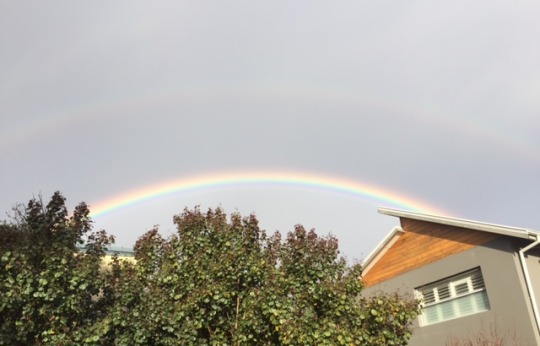
One perk of all the rain is the prevalence of rainbows. When I see one, I always wonder about the first person who observed this marvel:

“Jerry, you’ll never believe what I saw this morning when I left the cave to collect more berries.”

“What did you see, my darling?”

“An enormous, colorful belt across the sky. It was there one minute and gone the next.”

“Stop messing with me, Darlene. What’s a belt?”

Today I had neither plans nor motivation, so I went to the beach. It was too cold and blustery for swimming, so I wrapped myself in a puffy coat, long scarf and a beanie. I looked like a Mongolian baby.

If you head west on Eric Street from Stirling Highway, you reach the top of a hill and then suddenly, the Indian Ocean is in front you, massive and turquoise. As I got closer to the coastline, I could see and hear the waves crashing. The water evidenced a dangerous and angry Mother Nature at the end of her rope.

The beach was free of humans but the water was not. At first I was shocked to see surfers, but then I remembered in Australia, people are either brave or foolish, depending on your perspective. Four daredevils were being thrashed about awfully close to the rock jetty that protrudes from Cottesloe Beach like a giant’s index finger. I could hear them hooting with either terror or glee, and as I walked down the beach clutching my scarf that was determined to fly out and join them, I kept an eye on those boys.

My thoughts, like rainbows or sudden gusts of wind, were there one minute and gone the next. I thought about bicycles and how I wished I enjoyed them more. I thought about my daughter’s tree costume, whale sharks, Pauline Hanson, and whether or not rooibos tea would taste good with almond milk. I thought about the French gymnast with the broken leg.

And then, standing on the beach watching the surfers, one thought consumed the others like a tsunami. What if I’m doing all the wrong things? As my eyes began to fill with tears, I heard a loud rumble and within seconds, it started to hail. I took off my glasses and stuck them in my coat pocket and began to stumble in the direction of my car. The ferocious wind pushed me sideways. I could taste salt water on my lips. I looked out to where the surfers had been just moments ago, but I couldn’t see through the storm.

I slammed the car door, tossed my soaked beanie on the passenger seat and peeled off the wet paper maché previously known as my scarf. I checked my phone and ate some almonds. There was no way I was driving in this storm and besides, I needed to see the surfers.

I turned on the radio. It was Etta James. “You smiled and then the spell was cast. And here we are in heaven, for you are mine at last.” I remembered when my young cousin sang this song at her Bat Mitzvah, and how shocked I was to hear such a big voice come out of such a small person.

Soon the rain stopped. I counted four surfers and drove home, grateful for all the little things and mystified by the big ones.

The Houseguest

This week we have a houseguest, a young American we met a few months ago while traveling in a remote region of Western Australia called Monkey Mia, which, despite its name, is home to dolphins not monkeys. Also, Mia is pronounced Maya.

Anna, pronounced Anna, is an actress and a waitress and a searcher. Her visit is perfectly timed. She has a Millennial ease about her that makes me feel like America is going to be all right because her generation believes in compassion and fewer weapons and equal rights, and it’s all a matter of time. She brought us clay face masks and sparklers.

“When will we see you again?” my husband asked Anna last night before we went to sleep after sharing a bottle of Shiraz and talking about Bernie Sanders and Gilmore Girls. He was missing her while she was still here, one of Dave’s hallmarks. I knew how he felt.

In the spring of 1996, Dave and I stayed in the London home of a couple we had met at a house party in Boston, six months earlier. This couple spent the party cuddling on a couch radiating romance and mystery, and we spent the evening trying to be more like them. Galina was Ukrainian and her purple bra strap peeked out from her loose fitting sweater. Christophe was French and wore leather and smelled of cigarettes. They unsuctioned long enough to tell us that they had just completed a cross-country drive on motorcycle. Of course they rode motorcycles. These were not the kind of people who were going to waste time in the safety and banality of cars. I was transfixed, and when they offered their home as a layover on our way to Ireland later that year, I promised we would come. Few of us were internetting back then, so for months, I kept Galina’s phone number on a slip of paper in my underwear drawer.

Looking back now, they probably thought we were adorable. We were both twenty-two and newly in love. Dave had graduated from college and was very skinny then in his gray turtleneck sweater and jean jacket. I had dropped out of college and used my Legal Seafood waitressing money to buy my first pair of Doc Martens. We had only recently upgraded our multi-year friendship to what Australians would describe as full on. The trip to Ireland had been Dave’s idea. He had never traveled outside the U.S. and wanted to see his maternal family’s homeland. His mother would suddenly pass away soon after our return and of course we didn’t know that then, so that trip holds particular significance for both of us.

Galina and Christophe were in their mid-thirties and their art-filled Hampstead apartment had a red crushed velvet couch and a vintage record player. Galina allowed her husband to smoke inside but only next to an open window. With Christophe perched on the windowsill and his wife reclined on the sofa sipping an aperitif, we spoke of philosophy and travel. Dave and I occasionally exchanged looks conveying we are most certainly in the company of grown-ups.

We never saw Galina and Christophe again, but I thought of them last night as I said goodnight to our houseguest and crawled into bed. I thought about all the different kinds of relationships we have with all kinds of people, and how we’re all floating through space, occasionally bumping into each other. Some people are like satellites to us, and others are shooting stars.

The Audience Is Listening

I noticed him when we first arrived at the theater. He was hard to miss – a paralyzed man in a wheelchair being pushed by a beautiful woman with thick black braids. His face was contorted and his head leaned significantly to one side. The large wheelchair chair was tilted back, La-Z-Boy style, and his white sneakers looked brand new, as they would I suppose. I guessed he was about thirty. I wondered how long he’d been like this. “Blind from birth is what you want,” a visually impaired friend once told me. “To not know any different.” This friend had become blind at age eight, and still had memories of colors, which occasionally brought him immense sadness. After he lost his sight, his dad would drive him to big grassy fields so he could run fast and fall down safely.

The man in the wheelchair is now parked in the front of the stage. We are all here to see the Mucky Duck Bush Band, an Australian folk trio who has played together for forty years. They sing wistful songs about pretty Irish girls and soldiers returning from war. One of the performers, a friend here in Perth, asked my daughters to dance on stage during one of their songs. The girls are next to me, slightly fidgety with anticipation. “I don’t remember some of the steps,” the younger one had confessed to me this morning.

“It’s ok,” I had responded. “Just smile and try to have fun. People like to see other people enjoying themselves.”

The musicians walk out on stage with their various string instruments and within seconds, I’m tapping my feet and grinning ear to ear. It’s the kind of music that makes me want to live somewhere with a wrap-around porch and a shirtless banjo-playing wheat farmer.

Just as my wheat farmer is serenading me on the veranda, a loud noise erupts from the front of the auditorium. It is a primal groan, like an animal giving birth. The noise clearly startles the crowd and people crane their necks to see where it came from. It is the man in the wheelchair. The performers shift their gazes slightly but seem undeterred. I imagine after forty years, they’ve seen and heard everything.

He groans again, and also several times during the next song, a little ditty about Marco Polo.

Over the course of the next few songs, the audience’s collective curiosity and uneasiness morph into compassion and acceptance. We get it. This is not the sound of someone in pain. This is the sound of someone having a blast.

The girls dance beautifully and we walk to the lobby at intermission to stretch our legs. The younger one quietly inquires, “Why was the man making all that noise?” We talk about disabilities and some of us learn the word inadvertent. And then we eat some chocolate and go back in for the second half of the show.

During a silly song about all the animals in Australia that can kill you, the man in the wheelchair is particularly vocal. My younger daughter leans over to me with a huge smile and whispers, “He’s really enjoying himself.”

“It’s fun to see people enjoying themselves, isn’t it?” I whisper back.

She nods and squeezes my arm.

Lights Out

“The problem is, I have a bad memory and I’m half-black.”

“Huh?”

“I never remember anyone, but they always remember me.”

“Because you stand out.”

“Because I’m the only half-black person they’ve ever met.”

“Maybe it’s because you’re gorgeous.”

“Yeah that’s it.”

“Or maybe they’re like, hey that’s Gregory Hines.”

“No one thinks about Gregory Hines.”

“No one’s thought about Gregory Hines until they see you.”

“And they’re like, there’s that tap dancer from that movie that was on TV twenty years ago.”

“Did you read more about Dallas?”

“Fucking nuts. I guess it was inevitable. Crazy violence without justice causes more crazy violence.”

“I’m the only Jew some people have ever met.”

“That’s different.”

“I know.”

“Remember Mark from that summer program? He grew up in Beverly Hills and got pulled over basically every time he drove home.”

“BMW, right?”

“And my brother when he was leaving our grandparents’ house?”

“That was insane.”

“Our grandfather was a cop for god’s sake.”

“Everyone’s so angry.”

“Everyone’s always been angry.”

“Did you do lights out?”

“I was just about to. Did they practice tonight?”

“This morning before school.”

“Did you turn in the form?”

“Yep. That campus is huge. There’s like 2,000 students… Anyway, you really don’t remember her? She came to that party we had and wouldn’t leave. She had those cool boots.”

“Everyone has cool boots.”

“She was asking me about you.”

“Yeah cuz I’m the only black person she knows.”

“It’s eight-thirty. Can you do lights out?”