Mutilated Baby Girl

Cancer makes you see yourself as two bodies, the one you must fix and the one that will take over. I recently saw The Substance, the body horror film with Demi Moore as a 50-year-old TV star who, upon hearing she’s aged out of the business, gives herself an injection to release the younger version of herself so she can continue to enjoy the spotlight. Things fall apart of course, and blood and gore prevail. 

Before my double mastectomy, my mother would often say, “I can’t believe they’re going to cut you up,” even after I told her to stop saying that. I was stuck on the not-dying part, while my mother was preoccupied by the horror that awaited me.  

The movie is an in-your-face-allegory for attitudes towards the aging female form. But it is also a story of flesh and bones, and the ripping apart of everything that no longer serves us. The blood and gore in The Substance reaches a point of absurdity, reminiscent of the barfing scene in Triangle of Sadness

When I was in pre-op and the surgeon drew on me with Sharpie, it hit me. My body was a piece of meat to be carved and stuffed and sewn back up. Post-op, my body started to separate from me, becoming an object that belonged to me rather than the Me itself. 

At one point, my mother used the words mutilated and baby girl in the same sentence.  

Horror movies were never my favorite. I squeezed my eyes and ears shut during Poltergeist, Saw, The Conjuring, Rosemary’s Baby, even Scream. But during The Substance, I stared straight ahead at the screen as Demi Moore’s naked back split open and birthed Margaret Qualley. I watched calmly as a body was kicked relentlessly until both the victim and attacker were soaked in blood. I felt more gratitude than horror. 

I asked to see photos of my breast tissue after it was removed. At my bedside, the surgeon opened her phone to show me two perfectly round meat patties. Impossible Breasts. 

I asked to see photos of my ovaries. Teensy tiny worms. They were removed through my belly button. 

My mom might be tactless, but her words were an alarm bell for her daughter.

After the first few surgeries, it took me weeks to look in the mirror. I didn’t want to see the blood and the bruising. After the most recent one however, I examined myself as one might an artifact. I felt curious. This body was no longer me. It had transformed to something that simply held me. Plus, the fact that my breasts no longer had much sensation contributed to me seeing them as Other. Imagine your arm falling asleep and you poke at it as if to say, what is this strange limb doing on my pillow? 

Three years later, my naked form looks like a body intact. I spend a lot of time in a sauna with women of all ages. If cancer comes up in conversation, many are surprised to hear that I have been cut up and remade. But I’m a monster, I could say. A mutilated baby girl.     

Near the end of The Substance, a disfigured, fleshy corpus splits open to allow a bloody blob to fall to the floor. The blob is revealed to be a breast. It is by all accounts, revolting. I laughed. After cancer, I’ve been a bit lost in my body. I’d say I’m on a journey but that would involve saying the word journey. What pleased my old body no longer pleases this one. I’m still not sure what this one wants. But it might be horror movies. 
I’m Getting Older Too

The first time I fell madly in love was my freshman year of college. I saw this hyper-tall, not-conventionally handsome, sweaty man roaring through college on a bicycle and made it my mission to meet him. We finally did meet, one night in the rain, where we kissed near an overflowing garbage can. Even though he had no idea where to put his tongue, I didn’t care, and we dated for a year. 

He introduced me to a world of music with which I was previously unfamiliar. Metallica, Jane’s Addiction, Red Hot Chili Peppers, Cypress Hill. Angry, fun, not-conventionally handsome belters. And when a mysteriously named music festival landed in Long Island, my tongue-tied boyfriend borrowed a friend’s car, picked up Slurpee’s at 7-11, and took me to Lollapalooza. He wouldn’t let me buy a joint from a white man in a Rasta hat during Ice Cube’s set which should have been a sign that he liked to control me, but that day I thought it was sweet and I was in love with being with a man who could pick me up with one arm.  

That was the first time I heard Pearl Jam. When Eddie Vedder began to sing, I felt the way I do every time I look up at a skyscraper. Humans can do this? My people, my species, we can do this?

Nearly 30 years later, I am spending the weekend in Napa to attend a music festival with my just-tall-enough, very-much-handsome husband who has also introduced me to heaps of music and gratefully does not try to control me. Last night, as we were swaying to Stevie Nicks and marveling at her scarf changes between songs, I felt happy. Leading up to this weekend, I had three nightmares, three nights in a row, all having to do with October 7th, when festival goers in Israel were savagely attacked. I was nervous. Now that I’m here, though, I feel fine. Which also feels weird.  

Pearl Jam is performing tonight. I hope they play “Better Man.” I want to dance, and I also hope there is somewhere for me to sit down.    

When I was being treated for cancer a few years ago, I created a deathbed playlist on Spotify so if things did take a turn for the worse, at least “Call Me Maybe” wouldn’t be the last thing I’d ever hear. Eddie Vedder was predominantly featured, along with Bjork (of course) and Mussorgsky’s “Pictures at an Exhibition” which in retrospect might have been too frenetic. I deleted the playlist last year. 

An Argument for Returning to In-Person Work, or, A Cookie Tin Story

As customary when returning from an international trip, I brought a special treat to share with my coworkers. The salted caramel sugar biscuits came in a rectangular, bright blue flowered tin, the perfect size for storing pencils or chopsticks. I emailed all staff: “Cookies from Oxford! Enjoy!” One by one, the cookies disappeared. In the late afternoon, I stopped by the office kitchen for a consumption check. Not only were the cookies gone, but so was the tin. I really wanted that tin. I found myself with a dilemma. Do I email staff to ask for it back, or do I suck it up and accept the blame for not making it clear that I meant to keep the tin for myself? 

It was a Tuesday, a day many of us come to the office to work together, in person. On other days, those with more flexible schedules and the ability to accomplish tasks remotely, we work from home. 

Three years ago, before Covid hit, there’s no way I could have negotiated this hybrid situation in which I now find myself. “Will you be in tomorrow?” was never a question. I never knew I’d frequently use the word hybrid.

That Tuesday, while making an espresso in the office kitchen, I confessed to one of my colleagues, “I think someone stole my cookie tin.” Without hesitation, he said, “I saw that tin. It was sparkly. Get it back.” “But what if I seem petty? I mean, I didn’t specify.” He said, “If those cookies had been in a Tupperware or on a plate, no one would have taken it.” When two other colleagues joined us, we filled them in on the drama. “This is exciting, an office mystery!” one of them exclaimed, checking the trash and recycling. No tin.

As much I enjoy the flexibility, Covid really screwed us. Recently I listened to a podcast about the negative effect of the hybrid workplace. The story focused on people earlier in their careers, the ones who most need to network but don’t know that networking is predominantly an in-person activity. The best mentoring opportunities and career discussions stem from spontaneous interactions. And fruitful, spontaneous interactions don’t happen over Zoom. 

With the encouragement of my kitchen colleagues, I decided to write to all staff. “It is with a heavy and somewhat self-conscious heart I ask for my cookie tin back. Please return it to my desk. No questions asked.”

Word got around. “There’s lots of people here today,” said the office manager. “Does anyone look guilty?” A young colleague stopped by to give my dog a treat. Laughing, she said, “Maybe Ginger took it.” She’s having her first baby soon, and we talked for a while about managing a full-time job while being a new mother. 

My coworkers have made numerous attempts over the past few years to entice people to come into the office. Free parking and office supplies, flavored sparkling water, dog treats, Nespresso pods, nice bathrooms with that special poop spray. We just got a massage chair. Still, many of us continue to choose home over the workplace. 

Our office has cameras, in the event of a burglary. Our company president put up $10 to the charity of the thief’s choice. Someone else matched it. Nothing yet. 

English

The day after returning from England, I took my daughter prom dress shopping. She was thinking black or maroon but ended up with emerald. The woman who rang us up spoke in a thick Russian accent and was really pushing the department store’s credit card. No, I did not have a Macy’s card nor was I interested in one. But you could save twenty percent right now and there are no fees. No card thanks, just the dress. But what about your points? You can earn points. I am not interested in the card, thank you. Finally, maneuvering the dress into a plastic garment bag, she acquiesced and said sternly, “Ok but I will take all your reward points.” My daughter and I looked at each other, eyes wide, holding back fits of giggles. Later, over a suburban restaurant lunch of Caesar salads and Shirley Temples, we kept repeating, “I will take all of your reward points.”

That night, my husband and I went to see an all-female Japanese punk rock band, aptly described by Dave Grohl as, “the most fucking intense shit you’ve ever seen.” The lead singer dressed like an office temp, in a neatly tailored outfit, but sang like the boss had just killed her family. The only English I understood was when the lead guitarist middle-fingered the ecstatic crowd and screamed, “Buy our t-shirts!” On one song I later learned translates to “I Am Not Maternal,” the drummer stood up to get more bang. It was a wild night, and I can’t say I quite understood it. But I will remember how they made me feel. 

I had been in England to visit my brother, who is in a fancy fellowship program that is a very different kind of fucking intense shit. He is working in an office in a 500-year-old building with Beauty and the Beast sconces and ornate hooks for hanging your black gowns that you wear to dinner. One night at dinner, I sat next to the warden of the college, a kind, white-haired gentleman who, after inaugurating the meal with a Latin prayer, introduced himself to me using his first name which felt like fist bumping Joan of Arc. Over encrusted cod, I admired his refined language and imitated the way he nestled his fork and knife across his plate to symbolize he was ready for the next course. When he asked me what I thought of Oxford, I said, “I feel like I’ve landed on Intellectual Island.” He smiled, and then told me one day he’d like to write a suspense novel that is “sold at airports.”

Today the editor of the Merriam Webster dictionary announced, “It is permissible in English for a preposition to be what you end a sentence with. The idea that it should be avoided came from writers who were trying to align the language with Latin, but there is no reason to suggest ending a sentence with a preposition is wrong.”

I Met a Man

I met a man who is allergic to everything except beef and milk. And dark chocolate. He can eat that in small quantities. His bout with Covid two years ago left him with the inability to consume most things. Fruit? Itchy rash. Cucumbers? Forget about it. He leaves the house when his wife is cooking, because even the smells are repulsive. While he was sharing this with me at the dog park, he went through two Marlboro Reds. Our dogs seemed to like each other. I was surprised by the cucumbers because aren’t they mostly water? He said yes but they burn his mouth. 

On my walk home, I did what I sometimes do after meeting someone new. I thought about spending my life with this person. Someone who eats beef for breakfast, lunch, and dinner. An adult who drinks glasses of milk instead of wine or even lemonade. I’d have to eat out a lot. The restaurant staff would know me as the wife of the man who can’t eat anything. Here, have this pear walnut Roquefort salad before you go home. I’d feel sorry for him, but I’d also expect him to step up in other ways if this new life were to work out. He’d have to be an exceptional homemaker, lovemaker, dog walker. He’d have to be the funniest, kindest, most generous person to have ever lived. And that wouldn’t be fair. Someone should be allowed to eat prime rib for every meal and also be a jerk from time to time.

Wiping my dog’s paws once I got home, I realized my dog only eats beef and the occasional broccoli floret. Ginger is a terrible homemaker and don’t make a crass joke about the lovemaking. I would need to think of this new imaginary husband as a dog and not a person. A dog who smokes Marlboro Reds.

Let’s face it. This would not work out. By the time the dog got settled in her bed and I had started making dinner, the man and I had separated. I was spending too much money eating out and was way too hard on him. He can’t help it that he’s allergic to everything. 

By the time my actual husband got home, I was tired from the new husband and subsequent break-up. At dinner, I watched my actual husband eat salad with tomatoes and shallots as he listened to our daughter talk about her American History class. He drank wine like a grown-up. He doesn’t have allergies per se, but he’s never liked cream-based soups.   

If I Were A Poet

If I were a poet, I’d write about the dry-cleaning woman who was kind to my daughter and her bell-bottomed jeans that needed hemming. I’d write about the crow that waited on the sidewalk like a father forced to go shopping. But what about the man wanting a dollar for a coffee but how does anyone buy a coffee for a dollar in a town with eight-dollar donuts? If I were a poet, I’d stretch the word conflict to spill over the page and I’d rhyme words and phrases like antisemitism and no place for them. This morning, after the hemming, the patient crow, and the coffee incident, two freshly laundered Mormon boys in skinny black ties asked if I had time for a story. I said no thank you I’m Jewish. What I didn’t say was that today, on Irving Street, I am more Jewish than I’ve ever been, and my grandmother didn’t escape the Holocaust with my father, his baby brother, and diamonds in the sole of her shoe for all the who-said-whats. But maybe that’s exactly why she did. Because someday she’d have a granddaughter named in her memory who would still feel the hatred of Jews in the words people toss around without an eight-dollar morsel of understanding. If I were a poet, I’d fill a page with commas to look like tears, make a million copies, and hand them to slogan-lovers and say here, burn this instead. 

Down the Rabbit Hole

There is a bunny in the dog park. And it’s not a small, brown, outdoorsy bunny. This one is large, black and white, and fluffy. I first became aware of it when the friendly man with the Husky was running after his dog, screaming something in Russian. When I asked him if everything was ok, he said, gasping, “There’s a bunny.” I went on Next Door and sure enough, the previous day someone had posted, “Is anyone missing a rabbit? It’s in the park.” 

That was a month ago. Since then, it’s all anyone can talk about. It is a welcome distraction from Sadie the Terrier’s ear surgery or whether Chester is back on wet food. Now it’s bunny all the time. 

At first, everyone wanted to save the bunny. Red Raincoat with the Poodle was particularly concerned. “How’s it going to survive out here with all the dogs and coyotes?” Visor Lady (no dog) was convinced the bunny escaped the clutches of a neglectful owner. “If that were my rabbit, I’d be out day and night looking for it.” With all the big dogs running through the brush, we were all convinced that Bunny’s days were numbered. When my own dog hunted and gobbled up a gopher, I cringed at the thought of her nice girl reputation being replaced with Bunny Killer.

After a week or so, our worry turned to awe. “Darn bunny is still alive!” said the owner of the shaggy German Shepherd. “Saw it this morning!” The owner of the mean Chihuahua I once referred to as a cunt (not to its face) pointed out the increase of hawks in the park. I had been so focused on my own dog’s thirst for blood, not to mention the coyotes, that I had forgotten all about the hawks. 

It’s not a large park. You can walk its circumference in less than five minutes. I knew it was only a matter of time before I had my own spotting. And then one day, Ginger had run ahead on the path and when I turned the corner, she was intently staring at something. There, a few feet away, was a watermelon-sized, black and white bunny, chomping away on the grass, not a care in the world. This cutie had the confidence of a gangster. When I approached my dog to try and leash her, the bunny hopped away. Ginger sprinted after her. After a chase in the bushes, Ginger appeared, head hanging low. The energizer had outpaced a gopher-eating Lab. I was relieved. This park is so convenient. Being ostracized is not an option. 

Last week, several people saw not one but three bunnies! That sent everyone into a tizzy. “It’s all I think about,” confessed the blond computer programmer with the Pit Bull. I told her I understood, saying, “It’s the most exciting thing to happen to this park since the new playground.” She didn’t know the playground was new, so we had to talk about that for a few minutes even though my brain was screaming, “Bunny, bunny, bunny!” 

Eventually, the park community coalesced around a shared narrative that some dude had tossed his pregnant bunny to the curb, and now the tiny family is hopping around in the fresh air, mocking predators, and celebrating freedom. 

But yesterday, someone from a humane organization set traps. A few of us watched solemnly, as they set up three small metal cages with lettuce and carrots inside. This morning I expressed my feelings to the Russian Man with the Husky. “It makes me sad,” I said, “These bunnies seem like they’re living their best lives. Maybe they’re choosing quality over quantity.” 

He convinced me that if the bunnies survived a month with coyotes, hawks, and dogs, “they’re not stupid enough to walk into a little box.” As he sprinted after his dog, he called back over his shoulder, “Who wants to live life in a cage anyway?”

Who Cares That Robots Don’t Love Us Back

Someone has released a fleet of self-driving cars in my neighborhood. Not a human in sight. This morning on the way to work, a white one was stuck. Two lanes needed to merge, and in the right lane, the driverless car just sat there. All the boring regular cars like mine pulled around it. No one honked. Perhaps they knew there was no point. At the next red light, I stared out the window at the rain and wondered what would happen to that poor car. I felt sad. For a robot. 

I recently adopted a dog named Ginger. She weighs 90 pounds, has big brown eyes, and smells like a dirt road. The click of her toenails on the hardwood floor evokes a secretarial college typing class. She barks when the doorbell rings, or when a squirrel might be near, but mostly she is a quiet roaming presence. She greets everyone with a tail wag and half-closes her eyes if you rub her jiggly pink belly. She often looks forlorn which I’m guessing is mostly an evolutionary advantage, but perhaps also due to a recent change of lifestyle. Ginger’s previous owner died, so I’ve spent some time reading about grieving dogs. “While they may not understand the full extent of human absence, dogs do understand the emotional feeling of missing someone who’s no longer a part of their daily lives,” says one article. A stranger on the beach told me he could never adopt a dog who had had a loss like that. “It’s too sad,” he said, watching Ginger sniff a crow’s carcass before running back for a treat. “But good for you,” he called out over his shoulder as he ran to stop his goldendoodle from humping a terrier.

When Ginger knows I’m awake, she moseys over to my side of the bed to sniff my nose. And when I open my eyes, she wiggles her body back and forth in anticipation. I can see how some might dislike a dog’s dirty mouth in their face at the crack of dawn, but I love waking up this way, feeling loved and needed.  

Does this dog love me? I don’t care. I get to feed her and take her to the park. I get to scrape the yellow goop out of her eyes and rub my finger along her gums. I get to try and bathe her, even though she’d rather smell like dead seal than step one foot in a bathtub. I get to love her and say she’s mine.

Years ago, when I was living in Perth, I recall sitting in the car, hearing a news story about robots and humans. I was in a parking lot waiting for my daughter to finish her field hockey practice. An ibis was raiding the dumpster. It was pouring rain and my daughter would soon need a hot shower and a snack. The story focused on whether robots would ever love us back. Some scientists had figured out how to make robots mimic emotions like anger, love, and jealousy by releasing artificial oxytocin. I don’t remember the details, but I remember the scientist saying that if you ask a human whether their partner loves them, they will respond that they feel loved. And the same goes for the relationship between humans and robots. In other words, if you feel loved, you are loved. 

After work, I took the same way home. The driverless car was gone. Someone must have saved it. 

The Joy and the Whale

The swim club was abuzz. “There’s a whale out there,” a flushed-face woman announced as I dumped my bag on the locker room floor. No, she hadn’t seen it, but everyone was talking about it. “Someone said it’s just past the opening,” she said, as I stepped carefully into my swimsuit.

I swim in an enclosed part of the San Francisco Bay called Aquatic Park. The opening is just that, and will lead you to Alcatraz, the Golden Gate Bridge, and eventually the Pacific Ocean.  

Soon, my brother and I met up on the beach, in our bathing suits and fluorescent neoprene caps. Sometimes he tries to get me to swim to the opening and I usually say no. It’s further than I normally feel like swimming, and if something happens out there, it’s a long way back. That morning, however, we didn’t discuss our route. There was a whale out there, and we were swimming out to see it.

As always, the cold water stung for the first minute or so. I kept moving and breathing, and soon the burn was replaced with joy. 

Lately I’ve been thinking a lot about joy and burden. In the case of 54-degree water, for me, the joy of swimming in the Bay supersedes the burden of the initial discomfort. Many lifestyle choices come with both joy and burden: marriage, children, and travel to name a few. When the joy greatly outweighs the burden, it’s a no-brainer. 

Swimming out to see a possible whale felt especially joyful.  

I focused on pushing my arms through the water. I take this cancer-prevention medicine that makes my legs tire easily (joy of lowering rate of recurrence outweighs burden of unpleasant side effects). Just past the large buoy, we passed a swimmer we know. She was easy to spot with her graceful breaststroke, bright blue visor, and stylish sunglasses. “I saw a whale!” she said breathlessly. “I stayed out ten extra minutes just staring at it.” This was the motivation I needed so I readjusted my goggles and kicked hard to catch up with my brother. 

I spotted something black in the distance. “Is that it?” 

“That’s a bird,” he said with mild exasperation (joy of being with my brother outweighs burden of feeling like a little sister). I reminded him I wasn’t wearing my glasses, and he reminded me of all the times I’ve thought people were seals and tree branches were sealions. 

We swam over tiny waves, past a brown wooden boat named the Grace Quan. And then, just when we arrived at Muni Pier, right at the opening, we saw a giant spray in the distance. We both shrieked with delight. A dark shape glided across the surface and we kept shrieking. A whale! Even without my glasses, I could see its shiny coat. I was starting to shiver but I wanted more whale action. We treaded water for a while.  

“Remember when we all rented that house and Mom banged her knee and tried to get all of us to go to a park?” Daniel said suddenly, looking out towards Angel Island. 

“Yea,” I said. We were going to see our mother later that day. She wants to fire her social worker because she thinks she’s patronizing and too expensive (joy of having mother alive outweighs the burden of navigating the aging process with her).

My body was starting to feel warm which meant I had about 30 minutes to get to the sauna. We had to turn back. As we breaststroked side by side, I told him the entire plot of the movie The Whale. He asked me, “What did the students think of him when they saw his body for the first time?”

“They were repulsed,” I said. 

“Oh.”

“But then he takes a few steps towards his daughter- the redhead from Stranger Things- and dies.” 

“Oh,” he said. “That’s it?” 

“That’s it.” 

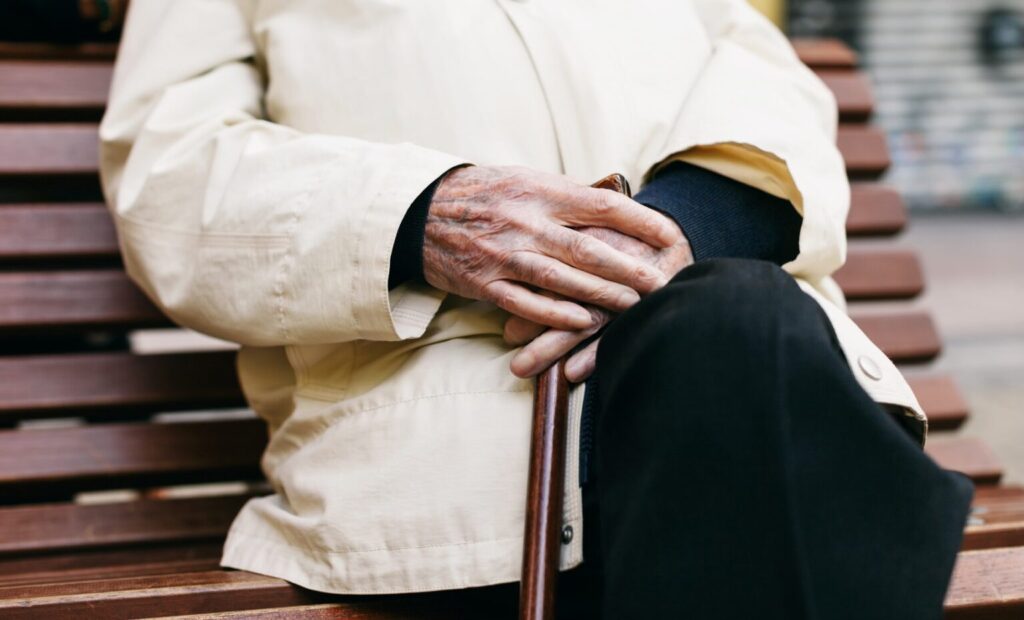
My Father’s Changing Hands

Cup of Jo, January 18, 2023

My father’s hands were tan with dark blue veins. His left hand was darker than his right, from years of smoking a cigar out the window of his 1965 Mustang.

During synagogue services, we often played a game where he’d make a tight fist and I’d tried to pry his fingers loose, one by one. Once all the fingers were released, I’d draw letters on his palm and slide my fingers along his veins, pretending I could move the blood to his wrists. His nails were always short with rounded edges and buffed to a shine. This was due to weekly professional manicures.

When I was growing up in the ’70s and ’80s, I was embarrassed by my father’s weekly manicures. I found it strange to think of him entering what I considered a woman’s space to do a woman’s thing. But by the time I reached college, I was bragging about my father’s peculiar ritual. To me, it said a lot about him.