The Bird

When I was fifteen, I walked into a sliding glass door. I still remember the private school girl’s snort. “Guess what Rebecca did,” she announced to a room full of boys in collared shirts.  

Do birds tease each other when they crash into glass windows? I doubt it. They might notice José or Janet has left the flock, but they probably just carry on with the business of flying.

Confused birds occasionally fly into the floor-to-ceiling windows of my house. I always feel sad when it happens and resolve to do something about it, but never follow through. The most recent collision was last night.  

I was sitting at the dining table alone, with a debilitating headache, missing out on something fun. Nurse Nancy with the cheerful voice had confirmed that, yes, headaches can be a side effect of the chemotherapy. When I told her it hurt to the touch, she said, “Your scalp might have some nerve damage.”

Great.

I had poured myself a glass of rosé even though no one had recommended this. I took Tylenol and made myself a bowl of chickpea pasta that tasted sandy. I opened my laptop and started watching a new show with Sandra Oh. Twenty minutes in, I heard a noise somewhere between a boom and a splat. 

The bird had fallen onto our plastic green IKEA chair. With its yellow belly, pale green wings, and legs sticking straight up in the air, the bird’s tiny tummy rose and fell with great haste. I closed my laptop and watched this new show, Tiny Creatures In Distress.  

Sipping my wine, I took stock. These last six months have been a bizarre dream. One month before my first novel was published, I received a phone call from an oncology nurse who said plainly, “It’s not the news we were hoping for.” Since then, I have been floating above myself, going through the motions of breast cancer treatments. 

I finished my fifteenth infusion of chemotherapy this week. One to go. My body feels encased in metal, or molasses. When I walk up two stairs, my legs want to fold. My nose bleeds without warning, and my three remaining eyebrow hairs stick straight out, in shock that they’re still here. And I am tired all the time. I have aged thirty years in thirty weeks. Is this what it’s like to be old? 

My mother and I were on the phone recently, comparing medical appointments. I said, “If this cancer comes back when I’m old, I don’t think I can do chemo again.” She said, “You say that now but when you’re old you’ll do anything to spend one more day with your family. Trust me.” 

I haven’t forgotten about the bird. 

After ten minutes or so, it rolled over and stood on the chair, still breathing heavily. It appeared to be looking at me through the glass. By now, our kitten was watching from inside, drooling. The three of us stayed this way for a while, stuck in a circle of curiosity – the bird looking at me, me looking at the cat, the cat looking at the bird. 

I try to take care of my body the way I would a child, a trick I picked up from Caitlin Moran. In her essay, “A Letter to Teenage Girls,” Moran instructs girls to provide safety and comfort to their bodies the way one would to an infant. I find this idea very comforting.

Walking into the infusion center week after week is not easy. Repeatedly poisoning myself in order to heal is a mind fuck. When I enter the hospital, it helps to tell myself, I would do this for my child. I would help my baby get better.

The bird finally began hopping around on the chair, pacing back and forth. I took a picture and sent it to a friend in Melbourne. “This doesn’t capture how bright the yellow is,” I wrote. 

I took a bite of gross gluten-free pasta and blew my bloody nose into a paper towel. When I looked outside, the bird was gone.  

You might believe the bird represents something here. Ending with a bird metaphor would be lovely. But the bird is not me. It is just a bird. They crash into windows sometimes, and the cancer is just a disease.

Full Stop Magazine

Jacqueline Knirnschild writes: “Edie’s observations are precise, poetic and contribute greatly to the novel’s verisimilitude, which is not surprising considering that Handler’s material comes from the seeds of her own observations of daily life in Perth.” Read full review 

MacDowell Fellowship

I am very honored to have received a MacDowell fellowship! Looking forward to spending April in New Hampshire, writing and meeting artists from all disciplines.

What We Don’t Understand

Boris is a middle-aged grocer with a stained t-shirt and a big grin. He prefers customers who pay in cash, and he tosses apples to the latchkey kids who come by after school. He donates blood as often as he can. He’s unfazed by needles and knows that his blood type – O negative – is the magic kind that can help anyone. 

That’s how I imagine him. 

My sister-in-law and I named my anonymous blood donor Boris. The charge nurse who is named after a month that is not April, May nor June warned me I could become cold as his blood first circulated throughout my body. As I watched the beet red liquid slink its way through the plastic tube attached to the port in my chest, I thought of the Buffy episode in which Spike takes Buffy to a brothel where humans pay vampires to drink their blood. I did not get cold.    

I needed a blood transfusion because chemotherapy caused my hemoglobin to drop. Hemoglobin is a protein that carries oxygen around the body, and low hemoglobin is related to anemia, a condition I had for a while as a teenager. I don’t remember feeling tired back then, but I do remember applying gold eyeliner before school and my mom shouting up the stairs, “Iron pills!” I didn’t like taking pills. Sometimes I lied to my mom and was mean about it. “I took the stupid iron pills Mom. Why do you always think I’m lying?” 

I felt weird about getting a blood transfusion. Who is this Boris fellow and what’s in his blood? The nurse assured me the process of preparing blood for transfer is safe. When she began using words like centrifuge and storage conditions, I realized I didn’t care and stared at the hazardous waste bin.

This was not the first time I didn’t understand something. Most days I don’t understand most things. I implicitly trust the expertise of other people when I drive my car, turn on my stove, and send my children back to in-person school. 

The working title of my first novel Edie Richter is Not Alone was You Belong to Everyone. One theme in the novel is that despite whatever intentions we might have to be self-sufficient and independent, we are connected and have a responsibility to each other. This is not a noteworthy observation, but it’s something I felt like exploring. 

Now, being treated for cancer, I can’t escape this idea. Week after week, I go to the hospital for everyone who loves me, including, but not limited to, myself. I don’t know how doxorubicin and cyclophosphamide work. I can’t even spell them without googling. 

This morning, someone ran a stop sign just as I stepped into the intersection. It reminded me that today, like every day, my life is in other people’s hands.  

What I’m saying is that everyone should get vaccinated. 

Conditions of Creativity: Rebecca Handler and Vendela Vida in Conversation

LA REVIEW OF BOOKS, AUGUST 6, 2021

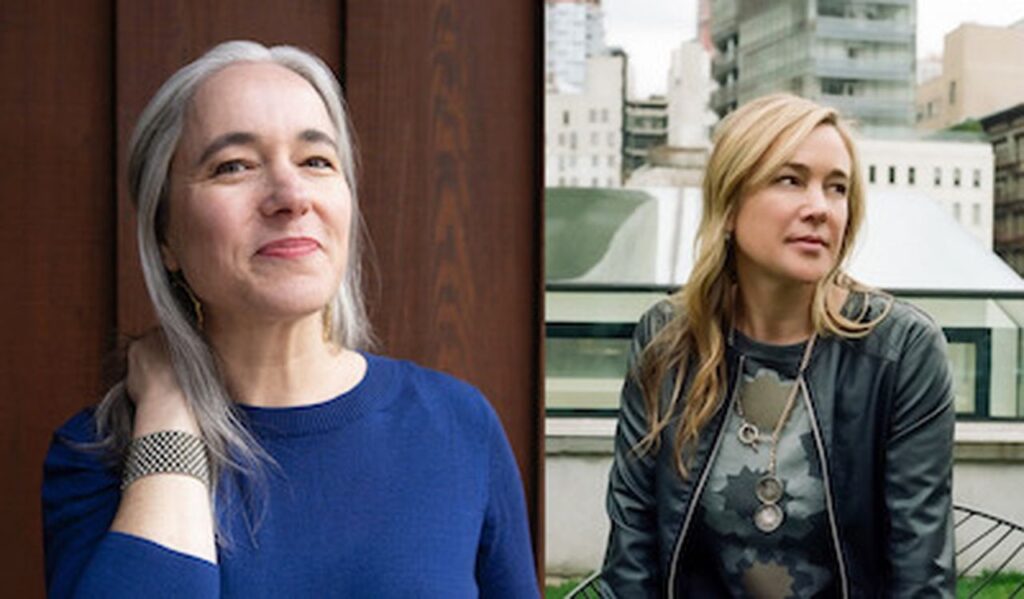
REBECCA HANDLER IS a writer who lives and works in San Francisco. Her stories have been published in several anthologies, and she blogs regularly. Edie Richter is Not Alone (2021) is her debut novel — of which, in a starred review, Booklist writes, “Handler’s Edie has joined the ranks of unforgettably eccentric, intelligent women protagonists.” A Kirkus starred review calls it a “tragicomic exploration of the collateral damage of Alzheimer’s disease. […] Handler gets it right from the title on out. Edie is definitely not alone.”

Vendela Vida is the award-winning author of six books, including We Run the Tides (2021), The Diver’s Clothes Lie Empty (2015), and Let the Northern Lights Erase Your Name (2008). She is a founding editor of The Believer magazine, and co-editor of The Believer Book of Writers Talking to Writers (2008). She was a founding board member of 826 Valencia, the San Francisco writing center for youth, and lives in the Bay Area with her family. Author photo by Lili Peper.

In this conversation, conducted via email in June, the two writers discuss their working methods, the power of setting in fiction, the importance of endings, and the need to find space to write.

The Hardest Part

The hardest part of cancer is walking into the infusion center week after week. The hardest part is smelling the alcohol swabs, wearing yet another wristband, and seeing the avocado drawing with the caption, “You guac!” The hardest part is answering the same questions about my birthday, whether my insurance has changed, and if I have any new allergies. I don’t want to get my blood drawn, and I don’t want to get weighed every week by the same woman with the beautiful blue eyes who has a “Helluva commute I tell you. Looks like the world is getting back to normal.” 

I don’t have any fucking new allergies.

I wish for a fire alarm in the middle of one of my infusions. I want the nurse to panic and rush me out of the building, still attached to my IV. The street would be filled with sick people and tiny babies in incubators. We would squint at the sunshine waiting for the fire fighters to arrive. A siren in the distance would cue my oncologist to start directing traffic, telling cars to get out of the way, to make way for the fire truck. My surgeon, fresh blood on her scrubs, would strike up a conversation with the check-in guy. “Can you believe this?” she’d say, removing her gloves. “Well, this is different!” One of the babies would start to cry and, maybe because I’m wearing a soft pink sweater, one of the nurses would ask if I’d mind holding the baby. I’d still be holding the warm blanket from the infusion center so I’d wrap it around the baby and sit down carefully on the curb. The baby’s eyes would be foggy because they’re brand new. I’d whisper, “Hush, it’s just a warning.” The truck would pull up and four fire fighters would run inside. The cafeteria woman would have a guitar and she would start playing Paul Simon’s “I Know What I Know.” Everyone would sing along. She moved so easily all I could think of was sunlight. The baby I’m holding would fall asleep. I’d stand up, taking care my IV is still in place, and return the baby to a nurse. I’d start dancing with the woman with the blue eyes who does my vitals. We’d be perfectly in step, doing a Charleston type of move.

It would be a false alarm of course, and everyone would eventually go back inside. But that day would be different. Easy even.